
Solar Energy in Uzbekistan by the Numbers: From 320 Sunny Days to a 54% Green Target
Four Years That Reshaped the Energy Mix
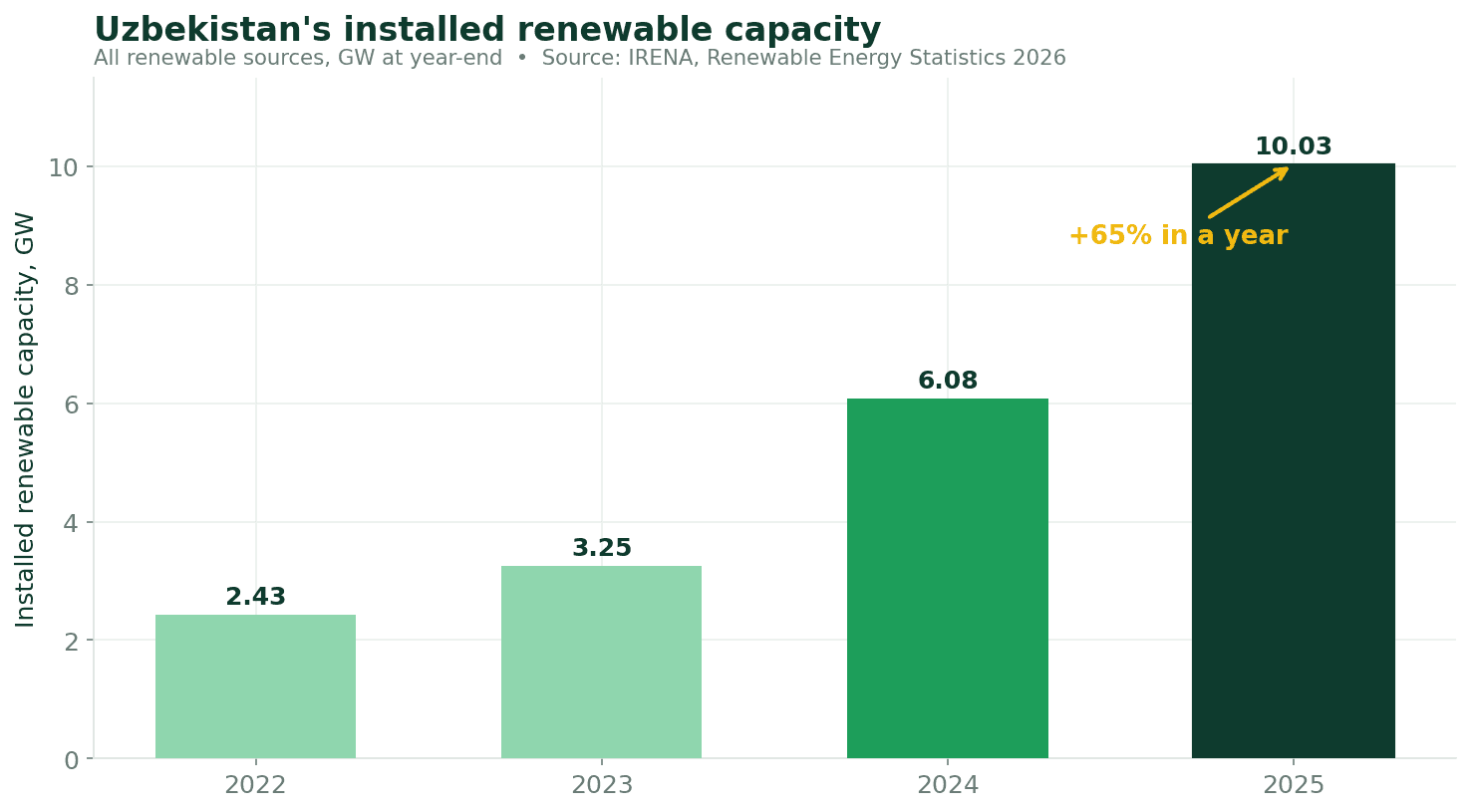
The turning point came in 2022–2025. According to the International Renewable Energy Agency (IRENA), Uzbekistan's installed renewable capacity rose from 2.4 GW in 2022 to 3.25 GW in 2023, 6.08 GW in 2024, and passed 10 GW (10,027 MW) by the end of 20251,2. In the last year alone, renewable capacity grew by almost 65%, and over four years it more than quadrupled1.
10 GW — Uzbekistan's installed renewable capacity at the end of 2025. That is four times the 2022 level and 65% above the year before1.
That growth has made Uzbekistan one of the fastest-growing renewable energy markets in Central Asia1.
The engine behind it is the active construction of solar and wind power plants. In 2025 they generated 10.5 billion kWh of electricity3, and this share of the national energy balance keeps rising with every new facility brought online.
Ten Gigawatts of Clean Power — and This Is Only the Start
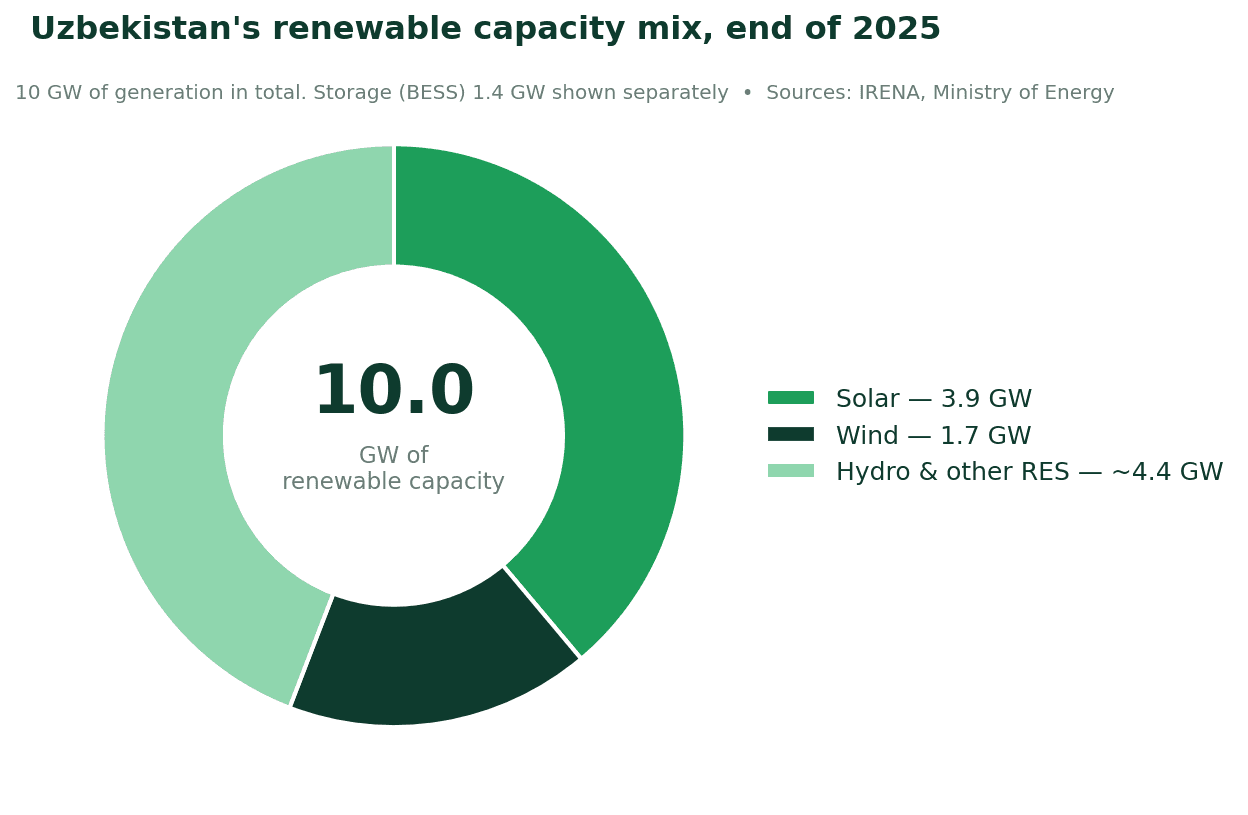
By the end of 2025, the country's total renewable capacity reached 10 GW. Within it are 3.9 GW of solar and 1.7 GW of wind plants (per the Ministry of Energy)3, with the rest coming from hydropower and other renewable sources. Separately, 1.4 GW of battery energy storage systems (BESS) are connected to the national grid3: storage does not generate electricity, but it smooths the evening demand peaks — when solar output drops — and makes the whole system more resilient.
A telling example is the Nur Bukhara project, delivered together with Masdar (UAE): a 250 MW solar plant paired with a 63 MW / 126 MWh storage system, commissioned ahead of schedule3. The project became a clear demonstration of how public-private partnership mechanisms and long-term power purchase agreements (PPAs) of 20–25 years work in practice.
The investment pipeline for the coming years is striking: through 2030, agreements have been signed for more than 15 GW of solar and wind projects and 3.7 GW of storage3. The national goal is to raise the share of renewables in the energy mix from 30% to 54%1.
The Global Context: Uzbekistan Moves With the World
Uzbekistan's green growth is unfolding against an unprecedented global boom. According to IRENA, total global renewable capacity reached 5,155 GW in 2025, up by almost 700 GW in a single year — a new record. Solar alone delivered three-quarters of that annual increase4.
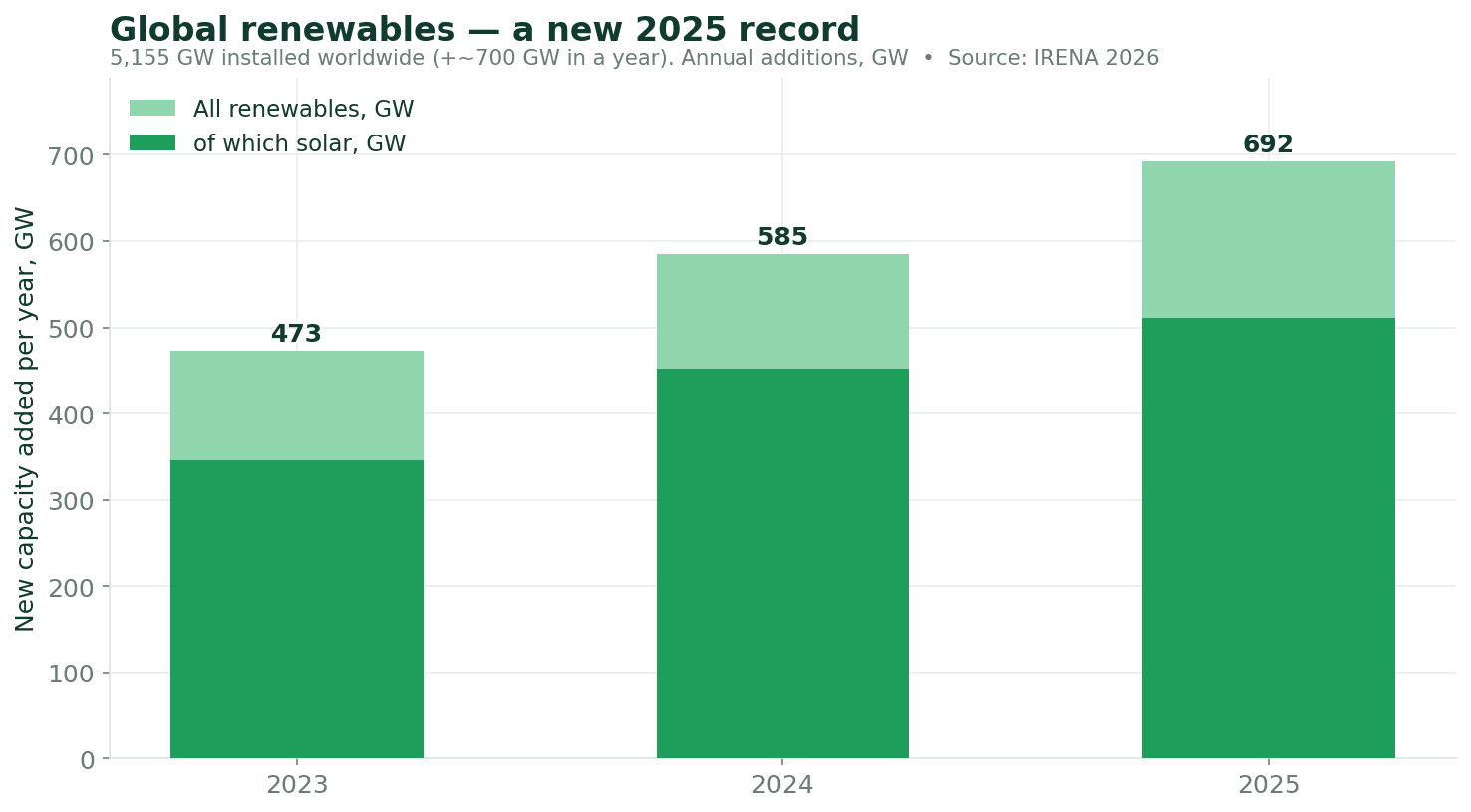
Asia remains the main driver, accounting for more than half of the world's renewable capacity. China continues to contribute the most, with renewable capacity reaching 2,258 GW, followed by the United States, the European Union and India1. Overall, renewables now make up almost half of all installed generation on the planet, and solar has become the world's largest renewable technology4.
The reason is simple and pragmatic: solar plants have become the cheapest and fastest way to add new capacity. A PV plant takes 2–3 years from concept to launch — versus 5–7 years for a large thermal station.
Sun on the Roof: How Household Panel Owners Earn
Uzbekistan's green transition is not only about gigawatt-scale plants. More and more households are installing their own solar panels, and the state is actively encouraging it.
Since 2025, a subsidy program has been in place: citizens are reimbursed up to 20% of the cost of solar panels and water heaters and up to 40% of the cost of heat pumps (within a set limit), while surplus electricity fed back into the unified grid is paid for out of the budget5.
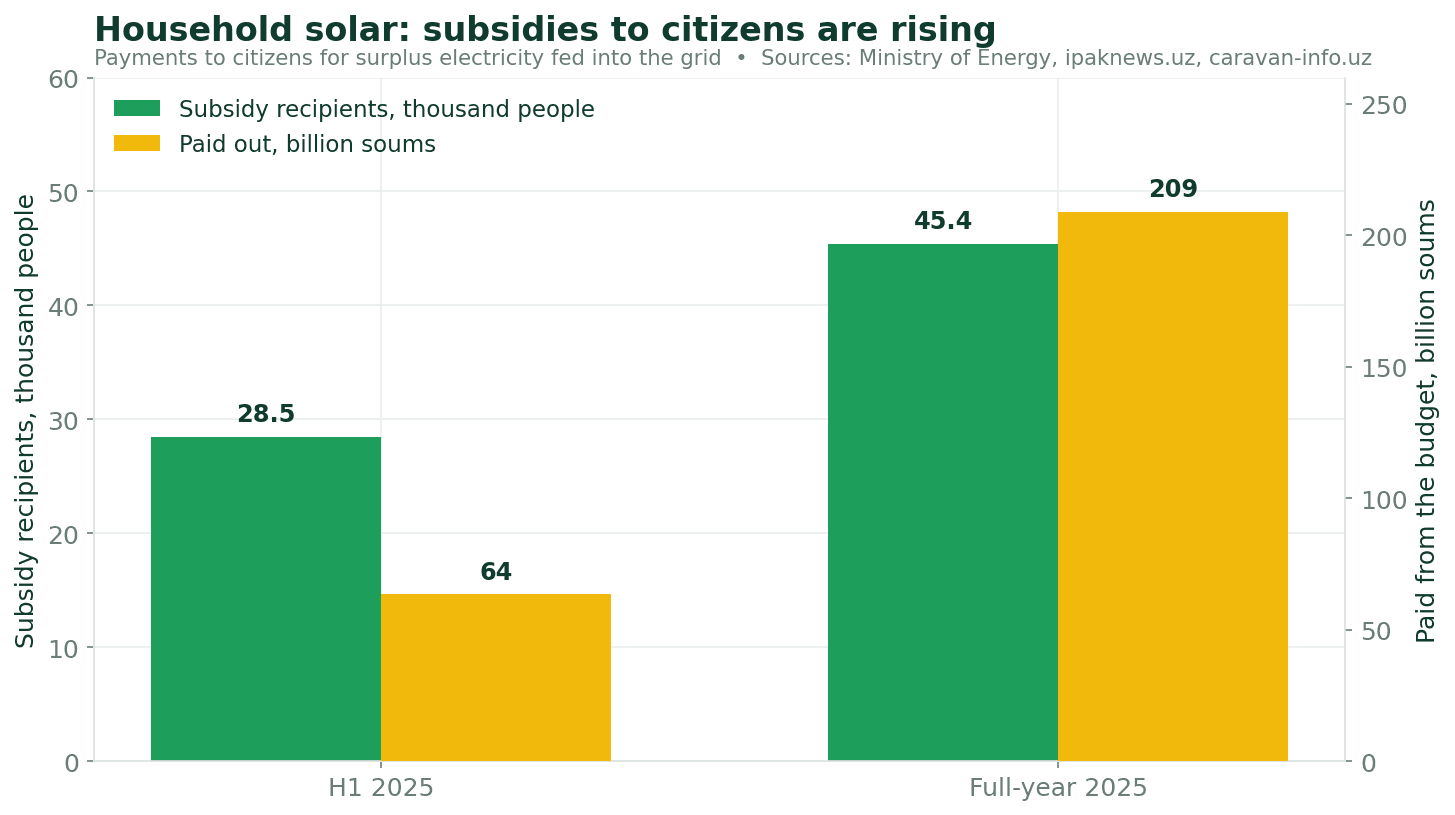
45,000 citizens received subsidies for grid-fed energy over 2025, with total payments
exceeding 209 billion soums6.
The results speak for themselves: while 28,500 people received subsidies for grid-fed energy in the first half of 2025, totaling 63.5 billion soums7, by the end of the full year the figure had grown to more than 45,000 citizens, with total payments exceeding 209 billion soums6.
Distributed generation eases the load on the grid, cuts transmission losses and improves supply reliability — especially in remote areas.
What Comes Next
Uzbekistan's strategic goal is to raise the share of renewables in the energy mix from 30% to 54% by 20301. Reaching it will require further scaling up of green capacity, expanding grid infrastructure and storage, and training a workforce for the new industry.
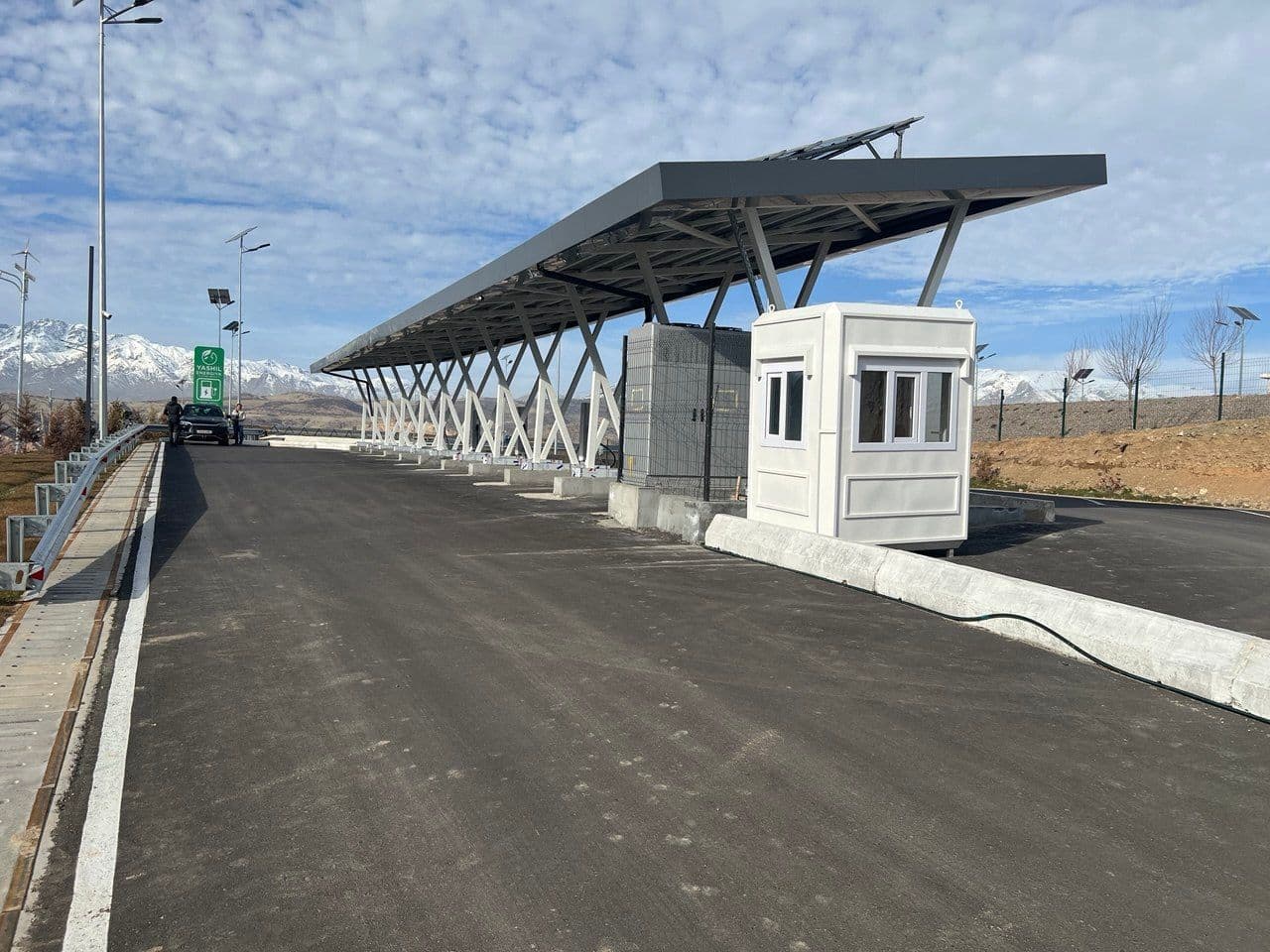
Yashil Energiya is developing all three directions of distributed green energy: solar plants at the sites of enterprises and organizations, micro- and mini-hydro, and a network of EV charging stations. By the end of 2025 the installed capacity of the company's operating assets reached 130 MW, and its charging stations are already running in the Kashkadarya, Jizzakh and Bukhara regions.
The sun shines over Uzbekistan 320 days a year. Now, more and more often, it is put to work.
Sources
Kursiv.media: Uzbekistan's renewable capacity grew 65% in a year (citing IRENA Renewable Energy Statistics 2026)- IRENA, Renewable Energy / Capacity Statistics 2026
- Interview with J. Mirzamakhmudov, The Investor Uzbekistan 2026 (Beyond Investments Group)
- PV Magazine: Global solar additions reached record 511 GW in 2025
- Gazeta.uz: subsidies for "green renovation" and solar panels
- 2025 payments to solar panel owners
- First-half 2025 data
- Uzbekistan's renewable potential (IEA / UNECE)