
CHINA’S EXPERIENCE: THE CONTRIBUTION OF RENEWABLE ENERGY TO THE DEVELOPMENT OF INDUSTRY, THE ECONOMY AND PRODUCTION
INTERNATIONAL ANALYTICAL ARTICLE / DAY 1
CHINA’S EXPERIENCE: THE CONTRIBUTION OF RENEWABLE ENERGY TO THE DEVELOPMENT OF INDUSTRY, THE ECONOMY AND PRODUCTION
10 COUNTRIES — 10 LEADING PRACTICES| DAY 1: CHINA |
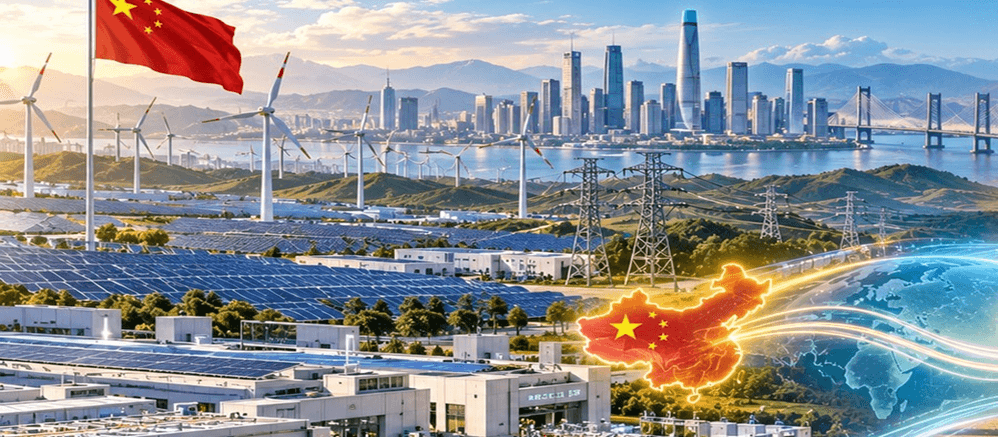
Solar and wind energy in China — a conceptual illustration on the subject (not a photograph of an actual facility).
China’s key figures•Industry and exports•Agrivoltaics•Energy storage•Official sources
Introduction
Today, China has made the development of renewable energy one of the important drivers of its national economic growth. Alongside the construction of solar and wind power plants, the country is rapidly developing the production of batteries, inverters and electrical equipment, high-voltage power grids, and digital control technologies.
A key feature of the Chinese experience is that renewable energy sources are being developed not as isolated energy projects, but as an economic system closely linked to industry, investment, exports, employment, and scientific and technological progress.
This article analyzes the results of China’s renewable energy development in 2025–2026, its impact on industry and exports, job creation, and the development of agrivoltaics and energy storage systems. Development of renewable energy in China
1. Key results for 2025–2026
According to China’s National Energy Administration (NEA), as of September 30, 2026, the country’s combined installed solar and wind power capacity had reached 2,010 GW.
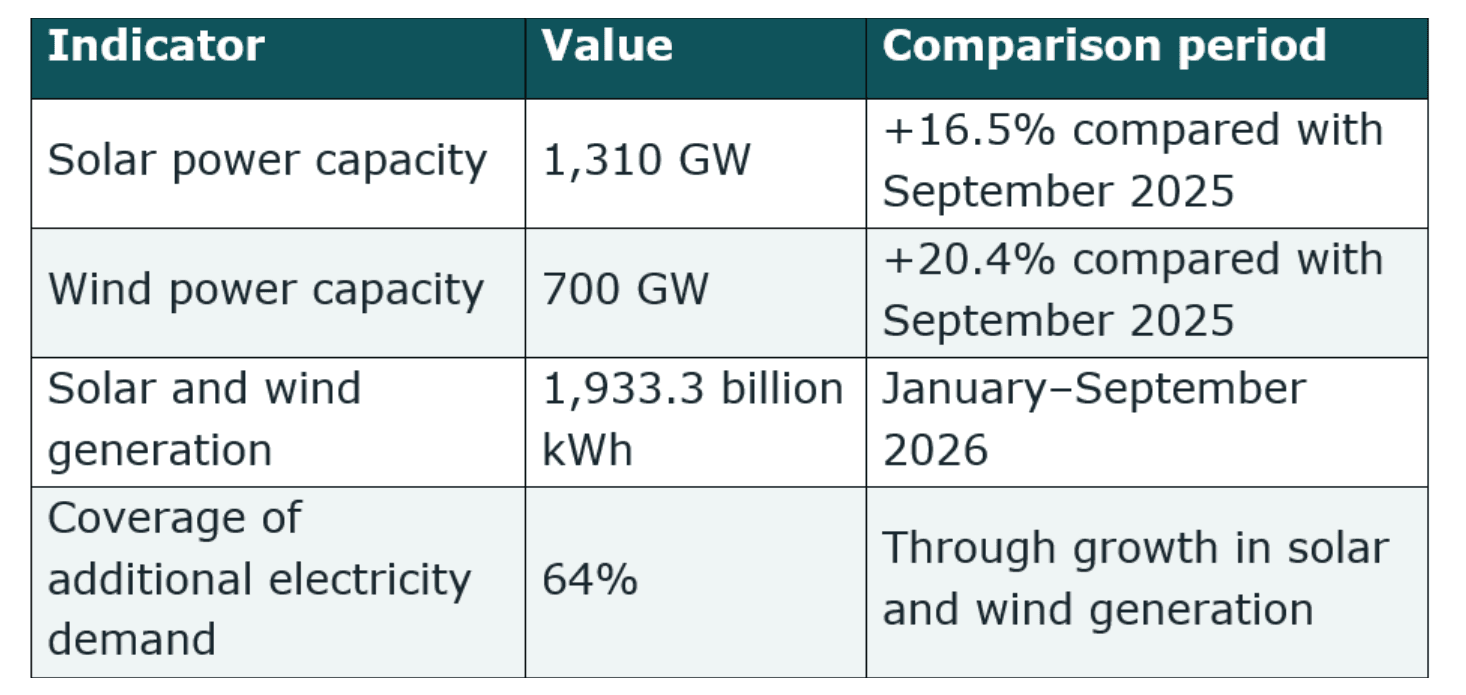
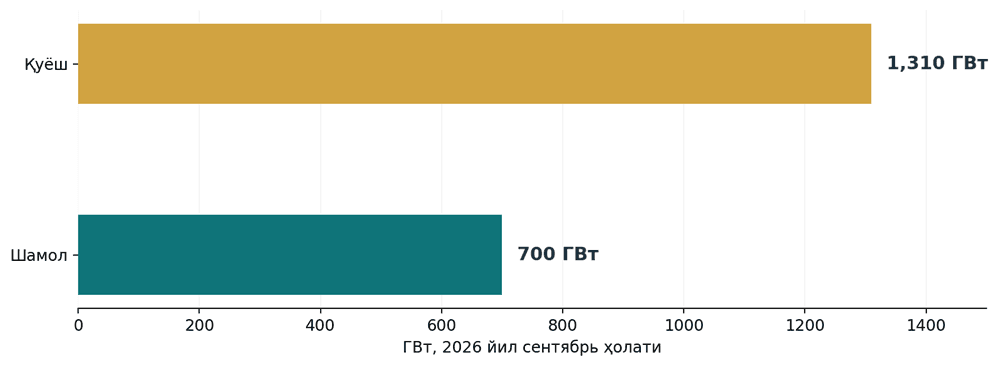
September 2026: total installed capacity of solar and wind power plants, GW. Source: NEA.
In the first nine months of 2026, electricity generation by solar and wind power plants increased by 193.7 billion kWh compared with the same period of the previous year.
According to China’s National Energy Administration, investment in solar and wind energy accounted for approximately one-third of all investment in the country’s energy sector during the period under review.
Source: NEA — results for the first nine months of 2026, October 26, 2026
These figures confirm that renewable energy has become one of the key areas for developing new generating capacity in China and meeting growing demand for electricity.
2. What contribution has renewable energy made to China’s economy?
When assessing the economic significance of renewable energy in China, it is not enough to consider only the capacity of power plants brought into operation. The production of electrical equipment, exports, the battery industry, investment, and services must also be taken into account.
According to a study by analysts at the Centre for Research on Energy and Clean Air (CREA), published by Carbon Brief on February 5, 2026, the value of economic activity related to clean energy in China reached 15.4 trillion yuan in 2025.

Source: CREA / Carbon Brief, February 5, 2026. In addition to solar and wind power, the study’s definition of clean energy includes electric transport, batteries, electricity networks, and other technologies. This is an independent analytical estimate, not official industry GDP statistics or companies’ net profits.
Source: Carbon Brief — contribution of clean energy industries to China’s economy
This result shows that the energy transition in China generates substantial demand not only in the electricity sector, but also for industrial products, services, and capital investment.
3. How did China become a leader in energy equipment manufacturing?
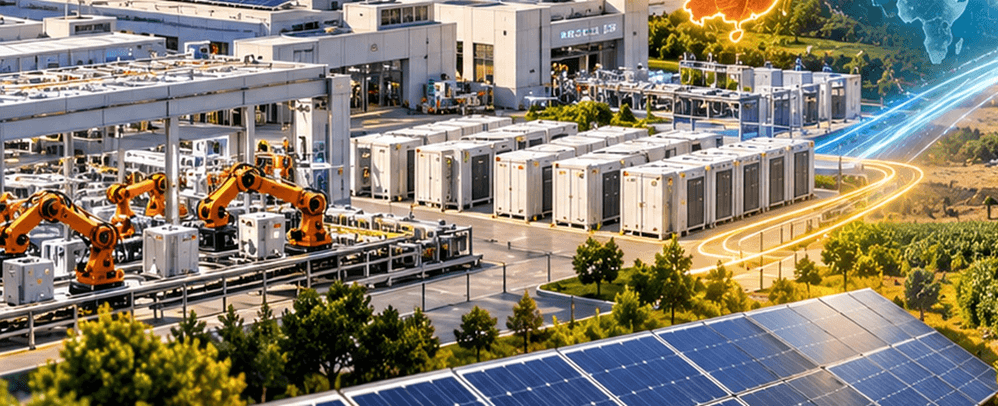
Thematic illustration of manufacturing (not a photograph of a specific factory).
A significant share of the equipment needed for renewable energy facilities in China is produced domestically.
According to the International Energy Agency (IEA) report “Energy Technology Perspectives 2026,” China’s share of global manufacturing capacity is:
- In the solar energy supply chain — approximately 85%.
- In the production of silicon wafers for solar cells — 95%.
- In the lithium-ion battery supply chain — approximately 80%.
These figures represent shares of manufacturing capacity; they must not be equated with actual volumes of global trade in the respective products.
Source:IEA — Energy Technology Perspectives 2026
China’s achievement lies in linking demand for the construction of solar power plants to the development of metallurgy, the chemical industry, electrical engineering, microelectronics, construction, and mechanical engineering.
Economic result: investment in energy also creates orders for businesses in other industries. However, the sector faces excess manufacturing capacity and intense price competition. Therefore, building factories does not always guarantee high profitability.
4. Exports and new jobs
According to the International Energy Agency, China’s exports of clean energy technologies exceeded USD 165 billion in 2025. This figure covers not only solar panels, but also electric vehicles, batteries, wind energy equipment, and other technologies.
According to a report by IRENA and the International Labour Organization, approximately 4.2 million people were employed in China’s solar photovoltaic industry in 2024. Of these, around 2 million worked in manufacturing and 2.22 million in construction, installation, and operation.
In addition, China’s exports of solar modules reached 242 GW in 2024.
Source:IRENA–ILO — Renewable Energy and Jobs: Annual Review 2025
These data show that a significant share of the economic benefits of renewable energy is associated with equipment manufacturing, installation, operation, and exports.
5. Another important Chinese experience — combining solar energy with agriculture
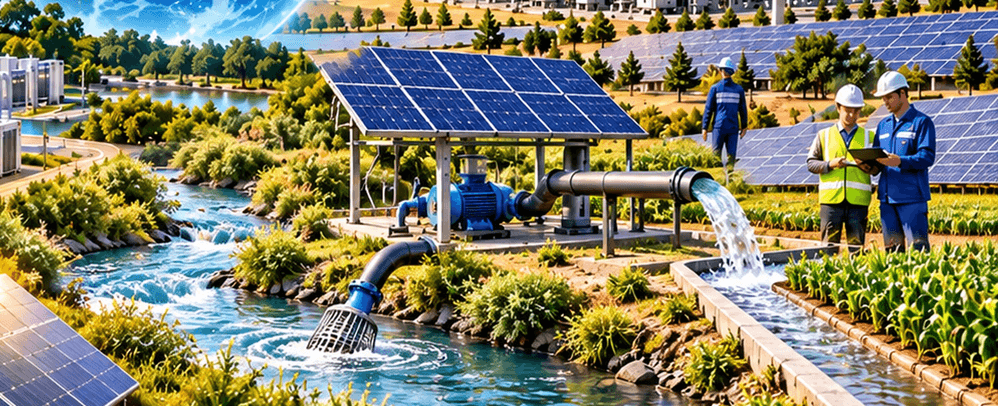
Conceptual illustration of agrivoltaics and irrigation.
In some regions of China, solar power plants are used not only to generate electricity, but also alongside agricultural activities.
This approach is called agrivoltaics. It involves using the same plot of land both to generate electricity and to grow agricultural crops or graze livestock.
A study published by the World Resources Institute (WRI) on September 17, 2025, analyzed 513 agrivoltaic projects in China reported in open sources. Their combined capacity was 31 GW.
For example, in the Talatan solar energy area in Qinghai Province, grass is grown under panels and sheep are grazed. In some areas, this has reduced vegetation maintenance costs and created additional opportunities for local livestock farmers.
However, research also shows that improper placement of solar panels can negatively affect crop yields. Therefore, shading, water consumption, soil conditions, and crop types must be assessed separately for each project.
Source:World Resources Institute — Agrivoltaics in China, September 17, 2025
6. Energy storage and power grid modernization
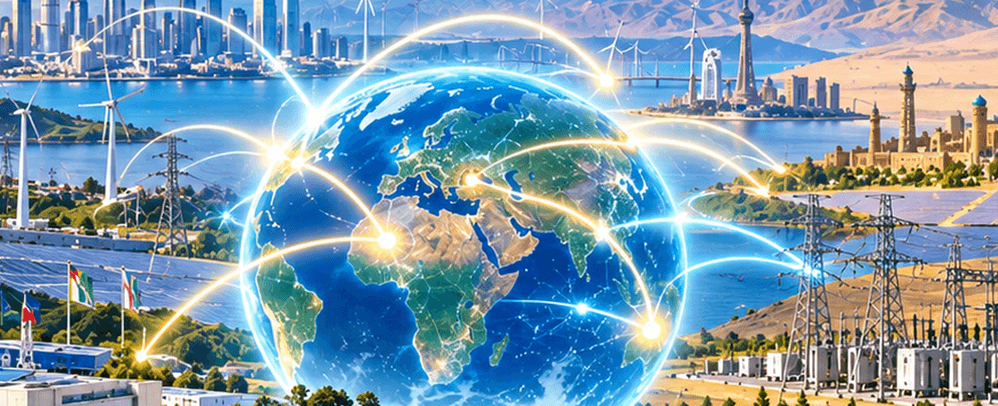
Integration of renewable energy sources and power grids — conceptual illustration.
China is developing renewable energy alongside the expansion of battery storage systems and electricity networks.
According to the CREA analysis, by the end of 2025, the total power capacity of grid-connected battery energy storage systems in China had exceeded 145 GW. Approximately 66 GW of new battery capacity was added during the year.
Batteries make it possible to store surplus electricity generated during the day, feed it into the grid during periods of high evening demand, and increase the flexibility of the electricity system.
Main economic lesson from China’s experience: when investment in renewable energy is planned together with power plant construction, energy storage, transmission lines, and the development of local industry, economic opportunities expand.
7. Economic constraints and new challenges in the Chinese experience
Rapid growth in solar module manufacturing capacity has led to lower prices for some products in China and stronger competition among manufacturers. Although equipment has become cheaper for buyers, this puts pressure on the financial performance of individual companies and the return on investment.
As the share of solar and wind generation increases, energy storage, grid expansion, flexible demand management, and efficient use of power plant capacity become increasingly important. Thus, China’s experience shows the need to consider not only high growth rates but also system infrastructure and financial sustainability.
Conclusion
China is among the countries that have managed to link renewable energy development with industrial production, exports, investment, new technologies, and energy security.
The scale of the sector is demonstrated by the fact that total installed renewable energy capacity reached 2,337 GW in 2025, while the combined installed capacity of solar and wind energy alone reached 2,010 GW in the first nine months of 2026.
Thus, renewable energy in China is gradually expanding well beyond electricity generation and becoming a large-scale economic system — a driver of growth linking industry, exports, technology, agriculture, and power grid modernization.
Main sources used
China
1. China NEA — 2025 results, February 12, 2026
2. China NEA — results for the first nine months of 2026, October 26, 2026
3. CREA / Carbon Brief — contribution of clean energy to China’s economy
4. IEA — Energy Technology Perspectives 2026
5. WRI China — agrivoltaics study, 2025
6. IRENA–ILO — Renewable Energy and Jobs
Editorial note
This article was prepared using open sources available as of October 30, 2026. The results for 2025 and the available figures for the first nine months of 2026 are presented separately. Estimates by independent analysts are distinguished from official statistics.
Illustrations: thematic conceptual images and analytical charts were used. They are not documentary photographs of specific power plants.
10 COUNTRIES — 10 LEADING PRACTICES!
RENEWABLE ENERGY — THE FOUNDATION OF A SUSTAINABLE ECONOMY AND A PROSPEROUS FUTURE!